
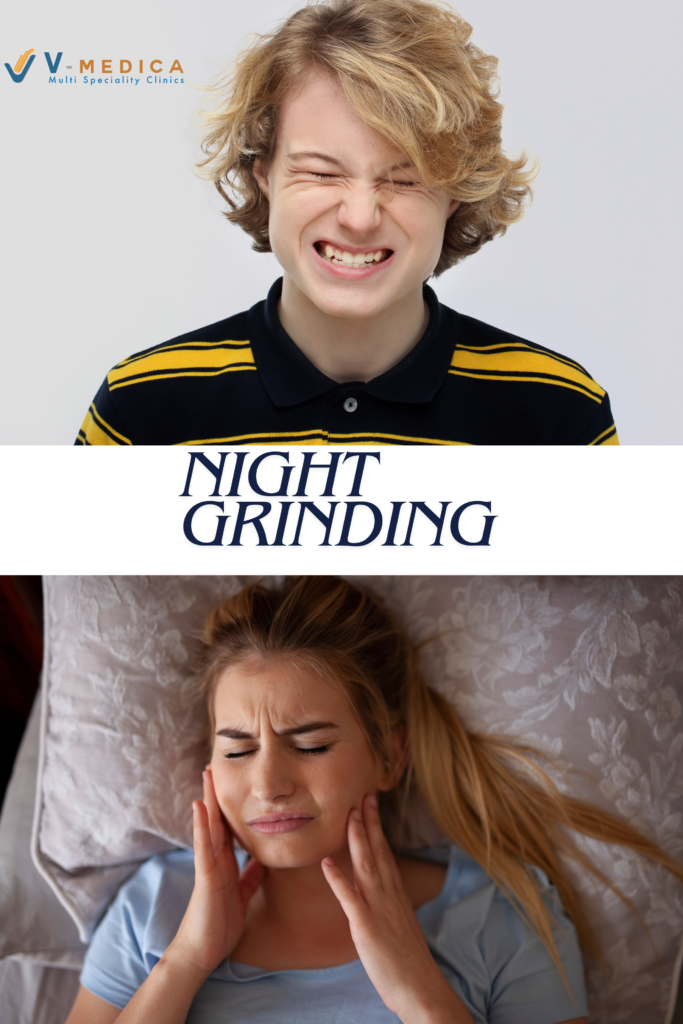
Night grinding of teeth, medically known as sleep bruxism, is a common yet often unnoticed condition that affects both adults and children. Studies suggest that nearly 10–15% of adults grind their teeth during sleep, usually without realizing it until symptoms like jaw pain, headaches, tooth sensitivity, or worn teeth appear. Bruxism is now classified as a sleep-related movement disorder and is frequently linked to stress, anxiety, disturbed sleep cycles, and lifestyle factors such as caffeine, alcohol, and smoking. In some cases, it may also be associated with conditions like sleep apnea, acid reflux, or certain medications.
The root cause of night grinding is usually multifactorial rather than dental alone. Psychological stress and emotional overload are considered the strongest triggers, as the brain continues to clench jaw muscles during deep sleep. Misaligned teeth, an abnormal bite, or missing teeth can contribute but are rarely the sole cause. Neurological factors, including altered neurotransmitter activity during sleep, also play a role—explaining why bruxism is more common in people with sleep disorders or high stress levels.
Prevention begins with addressing the triggers. Stress management through mindfulness, yoga, regular exercise, and improved sleep hygiene has shown significant benefit. Reducing evening intake of caffeine and alcohol, maintaining a consistent sleep schedule, and avoiding screen exposure before bedtime can calm the nervous system. Early dental evaluation is crucial, as untreated bruxism can lead to enamel erosion, cracked teeth, gum recession, and chronic jaw joint (TMJ) problems.
Treatment focuses on protection and long-term control. Custom-made night guards remain the gold standard to prevent tooth damage and reduce muscle strain. Depending on the severity, treatment may also include bite correction, physiotherapy for jaw muscles, management of sleep disorders, or counseling for stress and anxiety. When diagnosed early and managed holistically, night grinding is highly controllable—protecting not just your smile, but your overall sleep and quality of life.