
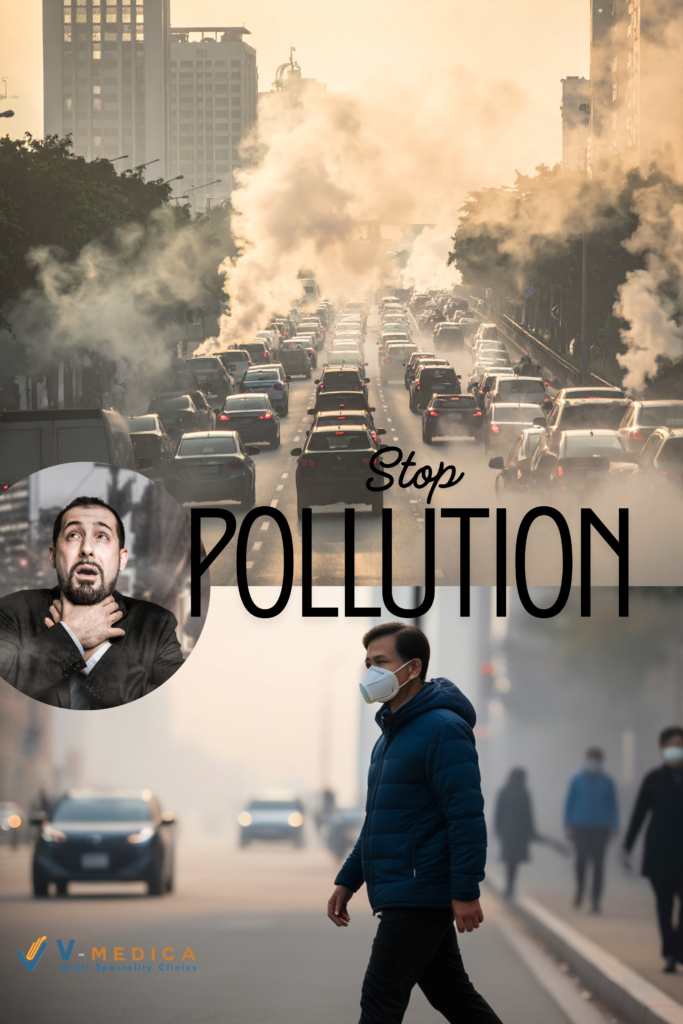
Air Quality Index (AQI) levels are rising in many cities and towns. Because of this, more people are developing ear, nose, and throat (ENT) problems. Poor air contains harmful particles such as PM2.5, PM10, nitrogen dioxide, sulfur dioxide, and ozone. These pollutants enter the nose and throat during breathing. As a result, they irritate the airway lining. This often leads to sinus problems, sore throat, cough, and voice issues. Children, older adults, and people with breathing conditions face higher risk.
Why Air Pollution Causes ENT Problems
The main reason for these problems is long-term inflammation. Fine particles damage the lining of the nose and throat. They also slow the tiny hairs that remove dust and germs. Because of this, mucus builds up more easily. People may notice blocked noses, post-nasal drip, throat pain, or ear pressure. Over time, sinus and ear infections may happen more often. In addition, polluted air can worsen asthma and sleep-related breathing problems.
Common ENT Symptoms Linked to High AQI
People exposed to high AQI often report frequent sneezing and nasal congestion. Sore throat and dry cough are also common. Some experience hoarseness or voice strain. Ear fullness and pressure may occur as well. Symptoms usually worsen during pollution peaks or winter months.
How to Protect Your ENT Health
Many of these problems can be prevented with simple steps. For example, wearing a mask on high-AQI days reduces exposure. Avoid outdoor exercise during peak pollution hours. Using air purifiers at home improves indoor air quality. Drinking enough water keeps airway lining healthy. In addition, saline nasal washes help clear pollutants and reduce irritation. Checking daily AQI levels helps people take timely precautions.
When to See an ENT Specialist
If symptoms last more than a few days, medical advice is important. ENT doctors may suggest medicines such as antihistamines or nasal sprays. Steam inhalation can also help in some cases. Treatment depends on the condition and severity. Early care prevents long-term issues. Without treatment, problems like chronic sinusitis, hearing loss, or voice strain may develop.
Key Takeaway
Air pollution is rising and affects ENT health in many ways. However, early prevention and timely treatment can reduce risks. Protecting your airways today can help maintain better health in the long run.
Book your appointment now with our empaneled ENT – Dr. Parul Sachdeva